
Local SEO Audit: The 8 Questions Every Brick-and-Mortar Brand Should Answer Before Hiring an Agency
- Doc. N°
- ELMTM-049
- Filed
- Class
- Local Search
- By
- Ethan Leard-Means
- Read
- 20 min
Most fitness and wellness operators sign a local SEO retainer before they fully understand what they're buying. They hand over a monthly budget, trust that the agency knows what's broken, and spend the first several months paying for discoveries they could have made themselves. That's an expensive and avoidable mistake.
Running your own local SEO audit before engaging any agency changes the entire dynamic. You walk into that conversation knowing your Google Business Profile health, your citation gaps, your review patterns, and whether your location pages are actually doing any ranking work. You stop being a prospect and start being a client who asks sharp questions and recognizes weak answers.
This guide gives you eight diagnostic questions to work through before you sign anything. Each question comes with clear benchmarks so you can measure where you stand, identify what's broken, and determine what any credible agency should be able to prove they'll fix. By the time you finish, you'll have a working picture of your local search foundation, and a much shorter list of agencies worth calling.
Why Running Your Own Local SEO Audit Saves You Money and Bad Hires
Most fitness and wellness operators who hire a local SEO agency without running a prior self-audit end up paying agency rates to fix problems that cost nothing to identify. Incomplete Google Business Profiles, inconsistent business listings, and zero review response cadence are all free to diagnose and often inexpensive to correct. Paying a retainer to discover what a 30-minute self-audit would have surfaced is a preventable waste.
The bigger cost is the feedback loop. Operators who skip the audit rarely realize they hired the wrong agency until rankings have not moved and the agency is still "building foundation." A self-audit changes the dynamic entirely. Instead of walking into a pitch asking "what can you do for us?", you arrive knowing precisely what is broken and can evaluate whether the agency's diagnosis matches yours. Any agency that cannot identify the same gaps you found independently is signaling limited capability before the contract is signed. For further guidance on evaluating agency fit, what to look for when choosing a digital marketing agency for SEO covers the key vetting criteria in detail.
The audit starts with Google Business Profile because the data demands it. GBP signals account for approximately 32% of local pack ranking factors according to Whitespark's 2026 Local Search Ranking Factors survey, making it the single highest-leverage element in local visibility. It is also a free tool that most operators have never fully configured.
The eight questions that follow each carry a concrete benchmark. Before any agency conversation begins, you should be able to answer all eight with current data, not assumptions.
Question 1: Is Your Google Business Profile Fully Built Out and Actively Managed?

GBP is the audit's first stop because it's the single most controllable local ranking asset you have, and most profiles are significantly underbuilt.
The completeness benchmark: Every applicable attribute category filled, a business description using the full 750-character allowance, accurate hours, correctly selected primary and secondary categories, and at least 10 photos updated within the last 90 days. Anything short of that is an incomplete profile, and Google's own guidance confirms that businesses with incomplete information risk not appearing in relevant local searches at all.
Fitness and wellness-specific attributes matter more than most operators realize. Fields such as accessibility features, ownership designations, amenities, and booking links are not cosmetic. They filter your profile into relevant searches that competitors with complete attribute sets may already be capturing. If you treat Google Business Profile as a primary acquisition channel rather than a directory listing, attribute completeness is non-negotiable.
Active management is a separate signal from completeness. A fully built profile that hasn't been touched in two months is a weak one. The minimum operating standard: Google Posts published on a consistent schedule, and a Q&A section seeded with answered questions that mirror your most common service inquiries. Both signal to Google that the business is active and engaged.
Red flags that indicate an agency's first billable hours will be foundation repair:
Unclaimed secondary locations
Suspended or flagged listings
A primary category that doesn't match your core service
A profile with no recent activity
What to ask any agency before signing: "Show us the GBP audit template you use during client onboarding." A competent local SEO agency maintains a structured attribute checklist calibrated to fitness or wellness verticals. Vague answers here signal the agency will diagnose your problems on your dime.
Question 2: Is Your NAP Data Consistent Across Every Directory That Matters?
Once your GBP is configured correctly, the next failure point is almost always citation data. NAP consistency is foundational infrastructure, not a ranking lever you optimize once and forget.
Consistency should be exact across your top citation sources, any variance in business name formatting, suite styling, or phone number format counts as an inconsistency. "Suite 200" and "Ste. 200" are different. "(713) 555-0100" and "713-555-0100" are different. At scale, those small discrepancies erode the trust signals that local search algorithms use to confirm your entity is legitimate.
Multi-location operators face a compounding problem. A studio that opened a second location without a systematic citation submission process almost always has worse NAP health at location two than location one. The flagship location accumulated listings organically over years; the second location was submitted in a rush. That gap compounds with every additional location you open without a documented process.
For fitness and wellness operators, the priority citation sources are: Google, Apple Maps, Bing Places, Yelp, and Facebook, plus any industry-specific directories relevant to your category. If you are uncertain which listings and directories to claim first, start with these before anything else.
Self-audit before any agency engagement: run your business name and phone number through BrightLocal's Citation Tracker or Whitespark's Citation Finder. If you find a pattern of inconsistencies across your top sources, you have a citation infrastructure problem, not a minor cleanup task.
The agency question that separates infrastructure builders from dependency creators: ask any prospective local SEO agency, "What is your citation audit and remediation process, and do you own the listings you build or do we?" Agencies that build citations through third-party aggregators without transferring ownership leave you locked in. That is a dependency, not an asset.
Finally, citation consistency is not a one-time project. Rebrands, relocations, phone number changes, and hours updates all create drift. Governance is the only thing that prevents it from accumulating silently across your directory footprint.
Question 3: What Does Your Review Velocity and Response Cadence Actually Look Like?
Citation consistency gets your business found in the right place. Review velocity determines whether Google, and increasingly AI platforms, believes your business is still worth surfacing.
Velocity benchmark for single-location studios in competitive metro markets: four to eight new reviews per month is the standard baseline for single-location businesses; competitive studios in metro markets should aim for the higher end of that range. Recency weighting intensified significantly after Google's March 2026 core update, with recent reviews carrying substantially more ranking influence than reviews older than 180 days. A studio sitting on 200 lifetime reviews with nothing posted in four months is algorithmically weaker than a competitor with 80 reviews and a steady monthly cadence. Volume without recency is a declining asset.
Response cadence is not optional. Respond to all negative reviews promptly, within two business days is a widely accepted standard, and make a consistent habit of responding to positive reviews as well. Most operators treat positive reviews as a passive win and move on. That's a missed opportunity on two fronts. Unanswered positive reviews forfeit a natural keyword insertion point, and they send a weak trust signal to both prospective members and the algorithm.
Review content quality now affects AI Overview visibility. Generative search results for queries like "best yoga studio in Houston" increasingly surface businesses whose reviews contain specific language: instructor names, service descriptions, and outcome statements. A five-star review that says "great studio!" contributes far less to AI discoverability than one that mentions a specific instructor, class format, and result. You cannot control what members write, but you can prompt better content through thoughtful review request messaging.
Self-audit: Pull every review from the last 90 days and calculate your monthly average. If that number is below four for a single location, the problem is your acquisition process, not your reputation. This same diagnostic logic applies across categories; the KPIs and cost structures behind dispensary SEO illustrate how review systems function as performance infrastructure regardless of vertical.
What to ask any local SEO agency: "How do you support review velocity without violating Google's policies?" Any agency that mentions review gating, incentivized reviews, or bulk acquisition should be disqualified immediately. Those tactics create short-term volume and long-term liability.
Question 4: Do Your Location Pages Send Enough Signal for Google to Trust Your Relevance?

Reviews tell Google you're active. Your location pages tell Google you're relevant. These are different problems requiring different fixes.
The baseline benchmark for a functional location page: full NAP in crawlable HTML text (not baked into an image), an embedded Google Map, a location-specific H1 that names both the city and the service, validated LocalBusiness schema markup, and substantial, location-specific content, not a brief paragraph. If any one of those five elements is missing, the page is underbuilt.
The most widespread on-page failure among multi-location fitness operators is template duplication. A studio opens a third location, copies the existing location page, swaps the city name, and calls it done. Google reads those pages as thin content. The suppression isn't isolated to the new page; it drags down every location page on the domain collectively. Unique content means more than different city names. It means different instructors, different parking situations, different neighborhood context.
That neighborhood context carries more weight than most operators realize. Entity prominence now influences both traditional local rankings and AI Overview citations. A location page that mentions the nearest cross-streets, a recognizable local landmark, and specific parking details gives Google a geographic anchor it can use to confirm your entity belongs where you claim it does. Generic copy doesn't provide that anchor. Hyper-local specificity does. For a deeper look at how these design and content decisions connect, The Local Dimension: GBP, Local SEO, and Design Decisions That Win Regional Markets covers the interaction between site structure and local signal strength.
LocalBusiness schema markup is widely recognized as a strong best practice for helping Google and AI platforms extract structured information from your location pages. A location page without it is invisible to systems that don't read prose. Implement nested GeoCoordinates, OpeningHoursSpecification, and AggregateRating properties as part of any complete location page build.
Self-audit: Run your primary location URL through Google's Rich Results Test. Then crawl it with Screaming Frog's structured data tool. Zero LocalBusiness schema or validation errors on that test represent exactly the kind of billable remediation a local SEO consultant will log on day one of your engagement.
What to ask an agency: "Can you show us a location page you've built and the schema behind it?" Agencies that can't produce that example aren't delivering complete infrastructure.
Question 5: Are You Targeting the Local Keywords That Actually Drive Foot Traffic?
Getting your location pages right is necessary infrastructure. But pages that are technically complete still underperform if they're optimized for the wrong keywords.
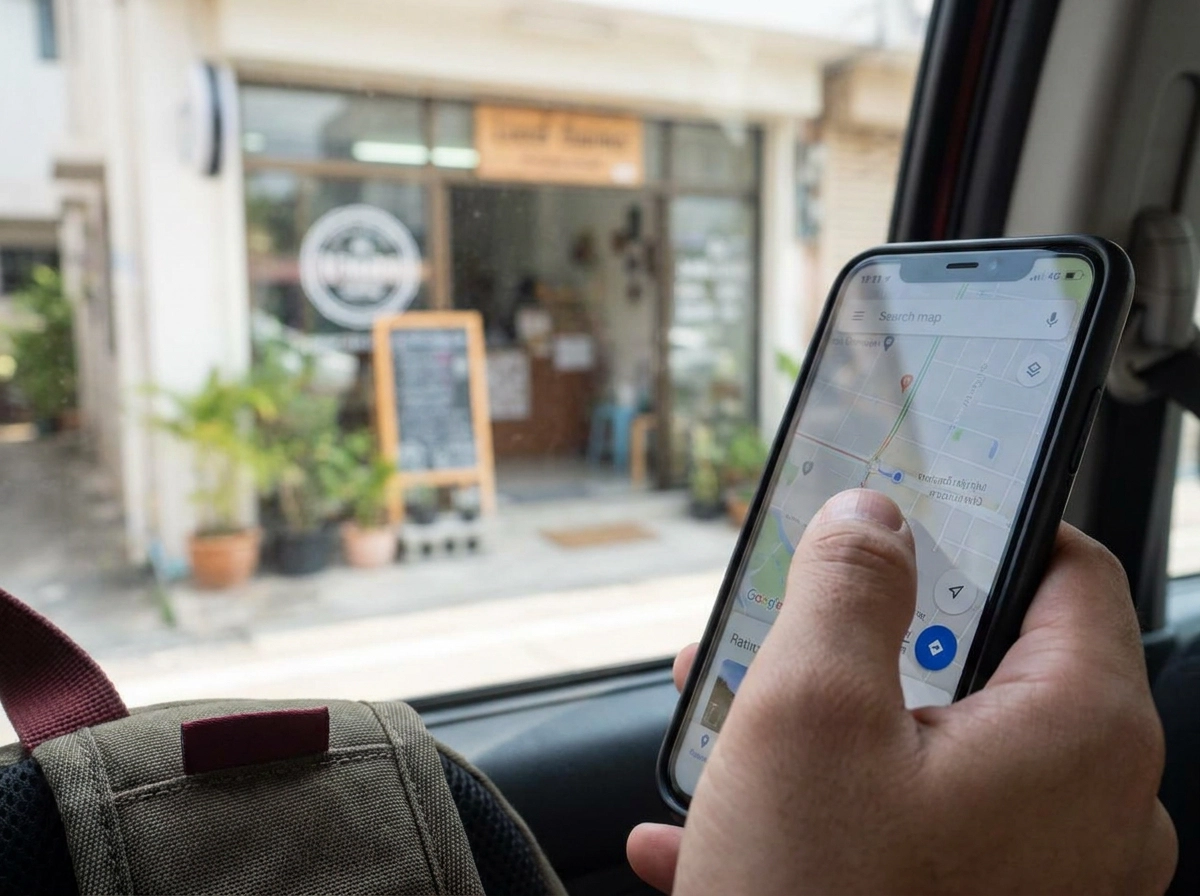
Vanity rankings don't fill class rosters. According to Think with Google, that conversion chain (76% of nearby mobile searchers visit within a day) only activates if you're ranking for terms your customers actually type, not the terms you assume they search.
The fitness and wellness keyword targeting failure follows a predictable pattern. Studios chase broad category terms like "gym in Houston" or "yoga classes Houston." These terms carry high competition and mixed intent. Meanwhile, modifier-level terms like "24-hour gym Midtown Houston," "prenatal yoga River Oaks," and "infrared sauna Memorial" go uncontested. Those longer queries carry lower competition and higher purchase intent because the searcher has already self-qualified.
Self-audit using Google Search Console. Pull the Queries report for your location pages and sort by impressions. Then compare those queries against your actual page content. If Google is serving your pages for "corporate yoga Houston" but your page never mentions corporate yoga, that gap is an unaddressed opportunity you can close without hiring anyone. This is exactly the kind of work that integrating local SEO directly into your content strategy makes systematic rather than reactive.
Competitor gap analysis adds a competitive dimension. Identify your top three local competitors and map their ranking keyword clusters using Semrush or Ahrefs. Any cluster where a competitor holds positions one through three and you have zero presence is a structural content gap, not a ranking problem.
Service-specific pages multiply your local pack entry points. A yoga studio with one homepage ranking for "yoga classes Houston" captures a fraction of available intent. Distinct pages for hot yoga, prenatal yoga, corporate yoga, and beginner yoga each create a separate local pack entry point. Each page is a discrete ranking asset.
What to ask a local SEO agency: "What is your keyword research methodology for local search, and how do you identify neighborhood-level and modifier-level opportunities beyond primary category terms?" An agency without a specific answer to that question will default to broad terms and deliver vanity rankings.
Question 6: Does Your Local Link Profile Support the Authority Your Rankings Require?
Ranking for the right keywords gets you in front of the right searchers. Whether Google trusts your site enough to act on that relevance is a separate question, and local link authority is where that trust is built or exposed.
The benchmark for a single-location fitness or wellness studio competing in a top-25 metro market is a meaningful set of referring domains from locally relevant sources, city business directories, neighborhood association sites, local media outlets, and community event sponsors, not generic national directories that every site in your category already has.
The most underutilized source in this category is also the most natural fit for fitness and wellness operators: local event sponsorships, charity partnerships, and community fitness events. A 5K sponsorship that earns a link from a city parks department page or a local news outlet carries more algorithmic weight than a dozen aggregator listings, because those links signal genuine community presence. Citation aggregators cannot replicate editorial placements.
Self-audit process: Run your domain through a backlink analysis tool such as Ahrefs or Moz Link Explorer and filter your referring domains for any geographic signal in the domain name, content, or location metadata. If the majority of your referring domains carry no local or regional signal, your authority profile rests on generic directory infrastructure, not community trust signals.
Multi-location operators face a compounding version of this problem. Links earned at the brand domain level do not automatically flow authority to individual location pages. Each market requires its own outreach strategy targeting locally relevant sources specific to that city or neighborhood. For operators expanding in multiple metros, this is often the link-building gap that a surface-level local wellness marketing audit fails to surface until rankings stall.
Agency evaluation is where link strategy separates real work from commodity packaging. An agency offering monthly link packages with fixed volumes and no editorial vetting is selling links that carry algorithmic risk. A credible local SEO services provider identifies specific opportunities and earns placements through content and outreach.
Before signing with any agency, request a backlink report covering the previous six months and cross-reference the referring domains against spam scores. A clean, locally relevant profile is evidence of real work. A list of generic directories and low-quality domains is evidence of volume fulfillment.
Question 7: If You Have Multiple Locations, Do You Have a Governance System or Just Good Intentions?
Link authority reveals what's already been built. This question reveals whether what you build next will hold.
Multi-location local SEO failure is almost never a strategy problem. It is a governance problem. Studios that expand without a documented operating rhythm for GBP updates, citation audits, review management, and content deployment see local SEO performance degrade with each new location added. The strategy is often sound; the systems to execute it consistently across locations simply do not exist.
The Governance Benchmark
A functional multi-location local SEO system requires a documented update protocol covering, at minimum:
Monthly GBP post schedule across every active location
Quarterly citation audit cycle to catch NAP drift before it compounds
Weekly review response SLA with a defined owner at each location
Change management process for hours, phone numbers, and service updates pushed simultaneously across all locations
If any of these exist only as informal habits rather than written protocols with assigned owners, you have intentions, not a system.
The Most Common Breakdown Point
A single missed hours update at a satellite location can trigger citation drift that compounds across a year of rebrands and schedule changes.
The Self-Audit Question
Ask every person responsible for any location's digital presence to describe the update process. If the answers differ, or if no one can answer, you do not have a governance system. You have individual effort, and individual effort does not scale past two locations without breaking.
What to Ask a Multi-Location Agency
Before signing with any local SEO agency that pitches multi-location capabilities, ask: "Walk us through your governance framework. What systems do you use to manage update propagation, audit compliance, and reporting across locations?" An agency without a documented answer to that question cannot manage multi-location complexity at scale. Vague references to "tools we use" are not a governance framework.
ELM Tree Marketing's structured revenue systems approach is built specifically for this gap, creating operating rhythms that maintain consistency across every location without requiring operators to manually manage every touchpoint.
Question 8: Is Your Local Presence Visible Beyond Google Maps, in AI Search Results?
Governance solves the multi-location execution problem. This final question addresses something governance cannot fix: a visibility gap that exists entirely outside the platforms your current audit probably measures.
A business can hold a top-three Maps position and rank on page one organically and still return zero results when a prospective member asks ChatGPT or Perplexity "what's the best yoga studio in Houston." These platforms don't pull from map pack rankings. They construct answers from entity consistency signals, structured content AI parsers can extract, and review language that demonstrates specific service authority. Only 11% of domains are cited by both ChatGPT and Perplexity, and pages cited in AI Overviews earn 35% more organic clicks than non-cited competitors on the same results page. That gap has direct revenue consequences.
GEO readiness benchmark: AI-generated local recommendations require three conditions working together. First, entity consistency: your business name, address, and description must match exactly across your GBP, website, and major directories. Second, review content must contain specific service language, instructor credentials, and outcome references, not just star ratings. Third, on-page content must be structured so AI parsers can extract and quote discrete answers.
Self-audit: Open ChatGPT and Perplexity. Search your category and city. If your competitors appear and you don't, you have a GEO visibility gap a traditional local SEO audit would never surface.
The highest-leverage action available right now: review response language. When owners respond to reviews by naming specific services, instructors, and location context, that content is indexed and treated by AI platforms as evidence of entity authority. Most operators leave this lever untouched.
Beyond LocalBusiness markup (covered in Question 4), FAQ, HowTo, and Event schema each add extraction points AI systems parse for generative answers.
What to ask any local SEO consultant or agency: "How do you approach GEO visibility and AI Overview optimization, and can you show an example of a client appearing in AI-generated local recommendations?" An agency presenting a Google Maps-only framework in 2026 is working from last year's playbook.
What to Do With Your Audit Results Before You Call an Agency
Once you've worked through all eight questions, organize your findings before you contact anyone.
Tier 1: Self-fix. GBP completion, basic citation corrections, and review response cadence cost nothing but time. Fix these before any agency pitch. Walking into a sales conversation with an incomplete profile and zero review responses signals that you need hand-holding on fundamentals, and agencies scope and price accordingly.
Tier 2: Partial support. Schema markup implementation, location page content, and keyword gap analysis require technical competency most operators don't have in-house, but they don't require a full retainer. A local SEO consultant can often close these gaps in a defined project engagement rather than an open-ended monthly contract.
Tier 3: Full-service engagement. Multi-location governance, GEO optimization, and local link building at scale require sustained systems work. This is where a local SEO agency relationship earns its cost.
Use your audit as a vetting instrument. For every gap you identified across the eight questions, prepare one specific diagnostic question for any agency you interview. Agencies that answer with vague process language or pivot to case studies instead of explaining their methodology are telling you something. Specific problems require specific answers.
Enter the first agency meeting with data, not a description of symptoms. Know your review velocity against your top three local competitors. Know your citation consistency score. Know whether you appear in AI platform results for your primary service queries. That preparation shifts the conversation from "we need local SEO help" to "here is our specific gap set; show us how you close it."
If you need a structured local SEO audit from a team that already understands how fitness and wellness businesses actually operate, ELM Tree Marketing builds these systems for brick-and-mortar brands. The audit conversation is where every engagement starts.
The Audit Is the First Test of Any Agency You Consider
These eight questions are a hiring filter as much as a self-assessment. Any local SEO agency that cannot walk through each one with specific benchmarks and documented processes is not equipped to manage your local search infrastructure. Vague answers to precise diagnostic questions are disqualifying, not negotiable.
Operators who complete this audit before agency engagement are better positioned to avoid paying agency rates for foundational remediation and to negotiate accountable outcomes from the outset.
The 2026 local search environment, AI-mediated discovery, multi-platform entity signals, and multi-location complexity, demands an agency that works from documented frameworks, not intuition. An agency still presenting a Google Maps-only framework cannot serve you in this environment.
That is the posture that attracts capable agencies and filters out the rest.
Conclusion
Running this audit before engaging any agency is not optional preparation; it is the strategic move that separates operators who lead negotiations from those who get managed through them. Eight questions. Eight diagnostic checkpoints that reveal exactly where your local search infrastructure stands today.
The eight questions map your foundation (GBP, citations, reviews, location pages) against your growth levers (keywords, links, governance, AI visibility), two tiers that demand different responses.
Document every answer. Quantify every gap. Then walk into agency conversations armed with specifics, not assumptions.
The brands winning local search in 2026 are not the ones with the biggest budgets. They are the ones who understood their own operation well enough to demand the right results from the right partners.
Start your audit today.
FAQ
How much time does a complete local SEO self-audit typically take?
A thorough self-audit covering all eight diagnostic questions typically takes 2-4 hours depending on the complexity of your business setup. However, a basic audit focused on GBP completeness, NAP consistency, and review velocity can be completed in 30-45 minutes. The key is gathering current data rather than making assumptions, so you can enter agency conversations with specific metrics rather than general observations.
What's the difference between citation consistency and citation building?
Citation consistency refers to ensuring your business name, address, and phone number (NAP) match exactly across all directories and platforms you're already listed on—this is maintenance work you can do yourself for free. Citation building is the process of adding your business to new directories and platforms for greater visibility. Consistency is foundational infrastructure; building is expansion. You must fix consistency issues before pursuing new citations, or you'll compound problems across your growing directory footprint.
Why does review recency matter more than total review volume?
After Google's March 2026 core update, the algorithm now heavily weights recent reviews over older ones. A business with 80 reviews posted consistently over the last 90 days ranks higher than a competitor with 200 lifetime reviews but nothing recent. This shift reflects Google's goal of surfacing active, current businesses. A four-month gap in reviews signals to the algorithm that your business may be stagnant, even if you have substantial historical volume. The key metric is monthly review velocity, not total count.
Can location pages on a multi-location website use the same template with different city names?
No. Template duplication with only city name changes results in thin content that Google penalizes. Instead, each location page needs unique, specific content that reflects that location's distinct characteristics—different instructors, unique parking situations, neighborhood landmarks, and local context. Generic copy doesn't provide the geographic anchors Google needs to confirm your entity belongs where you claim it does. This uniqueness requirement applies even if you have ten locations; each deserves location-specific relevance signals.
What should I do if I discover I'm not appearing in AI search results like ChatGPT or Perplexity?
First, ensure entity consistency across your GBP, website, and major directories—name, address, and description must match exactly. Second, improve your review response language by naming specific services, instructors, and location details rather than generic praise. Third, implement structured data markup (FAQ, HowTo, Event schema) on your website to give AI parsers more extraction points. Finally, update your location pages with specific service descriptions and outcomes. These three steps address the GEO visibility gap that traditional local SEO audits often miss. This is emerging territory; an agency that ignores AI optimization is working from last year's playbook.