
Local SEO Citations: What Still Matters, What Doesn't, and Where to Start
- Doc. N°
- ELMTM-045
- Filed
- Class
- Local Search
- By
- Ethan Leard-Means
- Read
- 12 min
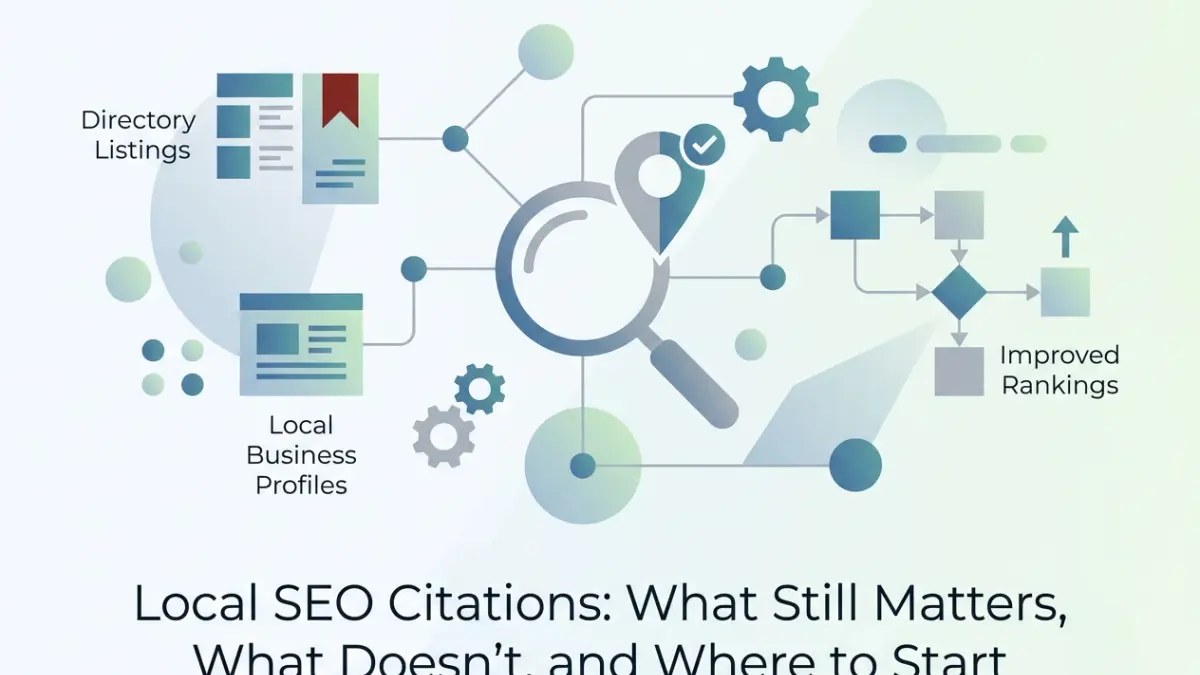
Most local SEO advice about citations sounds the same: build more of them, build them everywhere, and watch your rankings climb. That guidance is outdated, and following it is quietly costing businesses time and money they will never get back.
Local SEO citations still matter, but not in the way most guides suggest. A handful of accurate, consistent listings on authoritative directories will do more for your local search visibility than hundreds of low-quality submissions scattered across directories nobody uses. The businesses that understand this distinction rank better and spend far less effort maintaining their citation profile.
This guide cuts through the noise. You will learn which directories actually generate local ranking signal, which ones you can stop worrying about entirely, and how to audit what you already have before building anything new. You will also get a focused look at the unique citation challenges facing fitness, wellness, and 21+ brand operators, including compliance considerations and deplatforming risk. By the end, you will have a clear, prioritized action plan you can start executing this week rather than a theoretical framework that never makes it off the page.

What Citations Actually Are and Why They Still Matter
A citation is any online mention of your business's Name, Address, and Phone number (NAP). No link required; the mention alone carries ranking signal.
Google treats citation data as a corroboration mechanism. When multiple authoritative sources confirm that your business exists at a specific location, the algorithm gains confidence placing you in local results. One trusted source is useful; five consistent ones build a case the algorithm acts on.
Citations remain a confirmed local ranking factor, sitting alongside Google Business Profile signals, reviews, and on-page optimization. They are not the dominant factor, but they are a real one.
For fitness studios, wellness practitioners, and 21+ operators, including smoke shops, hemp retailers, and adult beverage brands, citations carry more strategic weight than they do for a typical retailer. Paid advertising channels are frequently restricted or unavailable in these categories, which makes local search one of the few scalable discovery mechanisms available. Getting citation fundamentals right is not optional when organic local visibility is your primary acquisition channel. A strong citation foundation also amplifies every other element of your local SEO content strategy.
The "citations are dead" argument is a misread. What actually happened is that bulk citation quantity stopped producing returns. The signal itself is intact, concentrating in a small number of authoritative sources rather than distributing evenly across low-quality directories. That distinction shapes everything in this guide.
Why Citation Quality Beats Citation Quantity Every Time
Knowing that citations still matter is one thing; knowing where they matter is what separates efficient local SEO from expensive busywork.
A small number of accurate Tier 1 listings carry more ranking weight than bulk placements on low-authority directories that see no real traffic and earn no algorithmic trust. Search engines treat authoritative directories as primary data sources, weighting those citations as corroborating evidence when resolving conflicting business information. A mention on a directory no one visits is noise, not signal.
Bulk citation services compound the problem. Rather than building a clean foundation, they frequently introduce inconsistencies that hurt rankings: misformatted phone numbers, dropped suite designations, and outdated addresses propagated across low-value sites. Every discrepancy gives the algorithm a reason to doubt your location data.
The ROI math favors quality decisively. Auditing and correcting five Tier 1 listings takes a fraction of the time required to manage a 100-directory submission, and the ranking impact is measurably superior. For restricted-category operators, this focus is especially important, covered in the category-specific section below.
The Directories That Actually Drive Local SEO Signal
Here is the short list of directories that actually move local rankings, organized by tier and category.
Tier 1: Universal Priorities
Every local business needs accurate NAP on five platforms before anything else: Google Business Profile (the single highest-impact citation asset in local SEO), Apple Maps, Bing Places, Yelp, and Facebook Business. These are where search engines go first to corroborate your business data.
Tier 2: Data Aggregators
Data Axle, Neustar Localeze, and Foursquare are worth a direct submission because they distribute your NAP to secondary directories automatically, eliminating the need for manual submission to each one. Fix the source, and the downstream corrections follow.
Fitness-Specific Directories
Mindbody and ClassPass carry strong category relevance and booking intent, making each listing a citation and a conversion asset simultaneously. Yelp's fitness category pages and the Better Business Bureau round out the short list.
Wellness-Specific Directories
Licensed practitioners should prioritize Healthgrades, Vitals, and WebMD's provider directory. Zocdoc is worth adding where applicable. These platforms are the category-standard directories for licensed practitioners and are where patients and search engines alike look first.
21+ Category Directories
Yelp and Google Business Profile both support adult beverage and smoke shop categories under correct classification. Leafly and Weedmaps serve hemp and cannabis operators specifically. For restricted brands that face deplatforming risk on general networks, local Chamber of Commerce listings are the most accessible and durable option.
Industry Associations and Local Organizations
Houston Chamber of Commerce listings, local fitness associations, and similar organizations deliver high-trust, low-competition placements. Understanding Local SEO and Google Business Profile as customer acquisition infrastructure helps clarify why these association citations carry weight that bulk services simply cannot replicate.
Citation Sources You Can Safely Ignore
Knowing where to build citations is only half the equation. Knowing what to skip protects the time you just freed up.
Bulk directory packages, typically marketed as "100 citations for $49," distribute your NAP to sites with no organic traffic, no editorial standards, and no authority signal Google weighs. Volume does not substitute for trust.
Low-authority directories with no relevance to your industry or geography add citation noise, not signal, and managing them is overhead with no measurable return on local rankings.
Automated citation blasts carry a secondary risk that is often ignored: inconsistent NAP formatting across hundreds of submissions. Mismatched suite abbreviations, transposed phone digits, and name variations create a correction backlog that costs more time to fix than the placements were worth.
Paid basic listings deserve the same scrutiny. If a directory charges for a standard listing and shows no evidence of real search traffic or user engagement, it is not a local SEO asset, regardless of what its sales page claims.
For 21+ brands, one additional category applies. Directories that have historically removed or suspended restricted-category businesses are a liability. Unstable citation history, where a listing is removed and reinstated, can introduce inconsistent signals into your local data footprint. For guidance on which listings and directories you should claim first, especially in restricted categories, prioritize platforms with a documented track record of stability over ones that treat your category as provisional.
How to Audit Your Current Citation Landscape
Now that you know which citations to avoid, the next step is mapping what you actually have.
Before you touch anything, define your master NAP record. Choose your exact legal business name, a single consistent address format (decide once whether "Suite 200" or "Ste. 200" appears), and the primary phone number that will live on every platform. Every audit finding gets measured against this standard.
Run the manual search first:
Google your exact business name plus city
Google your phone number in quotes
Google your street address in quotes
Document every listing that surfaces. Note any NAP discrepancy against your master record, even minor ones like a missing suite number or a transposed digit in the phone number.
Then run a free Moz Local or BrightLocal scan to catch what manual searching misses, including outdated listings from a previous address, a prior owner, or a name variation you no longer use. These tools generate a consistency report across major directories in minutes.
Categorize every citation you find into three buckets:
Accurate and live (no action needed)
Inaccurate and needs correction
Irrelevant and worth suppressing if possible
During the audit, give Google Business Profile separate attention. Categories, hours, service areas, and attributes all contribute to local SEO performance beyond NAP alone. Incomplete GBP data is a ranking gap that NAP corrections alone will not close. If your brand operates in a restricted category, see the Local SEO and Google Business Profile guidance for cannabis brands in 2026 for category-specific considerations.
For multi-location brands, run this audit per location. NAP inconsistencies exist at the location level and must be resolved there.
How to Fix NAP Inconsistencies Without Wasting Time
Once your audit surfaces inconsistencies, fix them in a sequence that maximizes ranking impact per hour spent.
Start with your five Tier 1 platforms in this order: Google Business Profile, Apple Maps, Bing Places, Yelp, and Facebook. Correcting these five resolves the largest share of local ranking inconsistency before you touch anything else.
Before editing any listing, claim it. Many platforms require ownership verification before accepting changes, and verification can take days to weeks. Attempting corrections on an unclaimed listing is wasted effort.
Then address data aggregators. Submit your master NAP directly through Data Axle, Neustar Localeze, and Foursquare's business portals. Accurate aggregator data propagates to secondary directories automatically, eliminating manual submission to each one.
Handle duplicates directly. If you find two listings for the same location on the same platform, do not leave both live. Contact the platform's business support channel and request a suppression or merge. Conflicting duplicates send contradictory signals that undercut every other correction you make.
Document as you go. Screenshot every correction with a visible timestamp. Citation platforms occasionally pull from older aggregator data and revert edits weeks later. A correction log cuts re-audit time significantly if that happens.
Set a quarterly calendar reminder to re-check your Tier 1 listings. Business moves, phone changes, and aggregator pulls can reintroduce inconsistencies long after you've resolved them. Four checks a year keeps your citation foundation clean.
This same discipline around data consistency applies beyond citations. If you have ever wondered why your Shopify data and ad platforms show different numbers, the root cause is often the same issue: mismatched data sources pulling from different records.

Citation Strategy for Fitness, Wellness, and 21+ Brands
The NAP correction process is universal. What you target beyond Tier 1 depends entirely on your category.
Fitness studios and gyms should treat Mindbody and ClassPass as priority citations, not optional add-ons. Both platforms carry strong category relevance and, more importantly, booking intent. A listing here functions as both a local SEO signal and a direct conversion asset, which no generic directory can match.
Wellness practitioners (massage therapists, acupuncturists, chiropractors) benefit from Healthgrades and state licensing board directories. Patients and referral sources treat these regulated directories as authoritative, and their category relevance makes them a natural priority.
Hemp, smoke, and adult beverage operators face a different challenge. Bulk citation networks routinely remove or reject restricted-category listings, making a high-volume approach counterproductive. The same platforms identified in the directory tier above, GBP, Yelp, and category-specific directories, are the priority here. For clients navigating advertising restrictions, this local presence often becomes the primary discovery channel, a point also explored in this overview of LSAs for Fitness and Wellness Brands: A Practical Look.
Chamber of Commerce and local business association listings are among the most accessible and durable options available for restricted-category brands.
Multi-location 21+ brands carry additional risk. A NAP mismatch at one location can introduce inconsistent signals that affect how search engines interpret your brand across all locations.
These categories require a specific playbook. ELM Tree Marketing works with fitness, wellness, and 21+ operators on citation audits and local SEO strategy built for how these businesses actually operate, not adapted from retail or food service templates.
Where to Start This Week
Strategy is only useful when it converts to action. Here is a five-day sequence that builds your citation foundation in the correct order.
Day 1: Document your master NAP record. Use your business name exactly as it appears on your license or registration, your full address with consistent suite formatting (choose "Ste" or "Suite" and never alternate), and the single phone number that will appear everywhere.
Day 2: Run a free BrightLocal or Moz Local scan and export your citation consistency report. Identify which Tier 1 listings are missing or inaccurate before touching anything else. Fixing without auditing first is how new inconsistencies get introduced.
Days 3 to 5: Claim and correct your five Tier 1 listings: Google Business Profile, Apple Maps, Bing Places, Yelp, and Facebook. Apply your master NAP to each. This single sequence delivers the highest local SEO ranking impact per hour of work available to most businesses.
Week 2: Submit your master NAP to the three major data aggregators (Data Axle, Neustar Localeze, Foursquare) and identify the one or two industry-specific directories most relevant to your category. For a deeper look at how local search, GBP, and site decisions work together, The Local Dimension: GBP, Local SEO, and Design Decisions That Win Regional Markets covers the full picture.
Ongoing: Set a quarterly audit reminder and monitor ranking movement over the following weeks to gauge propagation.
If you are managing multiple locations or operating in a restricted category, a local SEO services engagement focused on citation foundation work is the fastest path to a clean, durable baseline.
The Bottom Line on Local SEO Citations
The principle is simple: depth on authoritative platforms outperforms breadth across low-quality ones. For restricted-category brands, this focus is often the only viable path when paid channels are unavailable.
The audit-first approach matters because you cannot fix what you have not mapped. Knowing exactly what exists, what is broken, and what can be ignored prevents the wasted effort that gives citation building its busywork reputation in the first place.
For restricted-category brands specifically, Google Business Profile optimization and accurate citations are not a nice-to-have. They are often the only scalable organic discovery channel available. Getting this foundation right is a business-critical decision, not a marketing checkbox.
Conclusion

The framework is in place, now act on it. Pull your current NAP information from Google Business Profile and check it against Yelp and Apple Maps. That single comparison will tell you exactly where to focus your effort first, and that focus is where real local visibility begins.
FAQ
What is a citation in local SEO, and why does it still matter?
A citation is any online mention of your business's Name, Address, and Phone number (NAP), regardless of whether a link is included. Citations still matter because Google uses them as a corroboration mechanism—when multiple authoritative sources confirm your business exists at a specific location, the algorithm gains confidence placing you in local search results. While citations are not the dominant ranking factor, they remain a confirmed and real contributor alongside Google Business Profile signals, reviews, and on-page optimization.
Why is citation quality more important than citation quantity?
A small number of accurate listings on authoritative Tier 1 directories carries more ranking weight than bulk placements on low-authority sites that receive no real traffic. Search engines treat authoritative directories as primary data sources, weighting those citations more heavily when resolving business information conflicts. Bulk citation services often introduce inconsistencies like misformatted phone numbers and dropped suite designations that actually hurt rankings. The ROI math is clear: auditing and correcting five Tier 1 listings takes a fraction of the time of managing 100 directory submissions and produces measurably superior ranking impact.
What are the five Tier 1 directories every local business should prioritize?
Every local business needs accurate NAP on these five platforms before anything else: Google Business Profile (the highest-impact citation asset), Apple Maps, Bing Places, Yelp, and Facebook Business. These are the directories search engines consult first to corroborate your business data. Correcting your information on these five platforms resolves the largest share of local ranking inconsistency and should be your first priority when building your citation foundation.
How should fitness studios, wellness practitioners, and 21+ brands approach citations differently?
These restricted categories face unique citation challenges. For fitness studios, Mindbody and ClassPass are priority citations because they carry strong category relevance and booking intent. Wellness practitioners should prioritize Healthgrades and state licensing board directories, which are treated as authoritative by patients and referral sources. Hemp, smoke, and adult beverage operators should focus on platforms like Google Business Profile, Yelp, Leafly, and Weedmaps rather than bulk citation networks, which routinely remove or reject restricted-category listings. For these brands, local search often becomes the primary discovery channel when paid advertising is unavailable.
What is the best first step to audit and fix my current citation profile?
Start by defining your master NAP record using your exact legal business name, a single consistent address format, and your primary phone number. Then conduct a manual search using your exact business name plus city, your phone number in quotes, and your street address in quotes to document all listings. Follow this with a free scan using Moz Local or BrightLocal to catch outdated listings. Categorize findings into accurate/live, inaccurate/needs correction, and irrelevant/should be suppressed. Finally, claim and correct your five Tier 1 listings in order: Google Business Profile, Apple Maps, Bing Places, Yelp, and Facebook, completing this sequence before tackling any other directories.